Where Generative AI Wins—and Where Traditional Search Still Matters
by James Sorensen and Eric Scheer
Search has long been the connective tissue of digital commerce. When shoppers wanted to learn about products, compare options, or make decisions, they searched—and brands organized entire strategies around being found.
That model is now splitting in two.
Our on-going research on AI usage1 with shoppers now reflects that Generative AI (GenAI) is rapidly displacing traditional search for early, educational shopping tasks, while traditional search still dominates the final moments before purchase. This isn’t a temporary transition—it’s a structural shift in how influence and execution are distributed across the shopper journey.
Generative AI Has Moved from Experiment to Habit
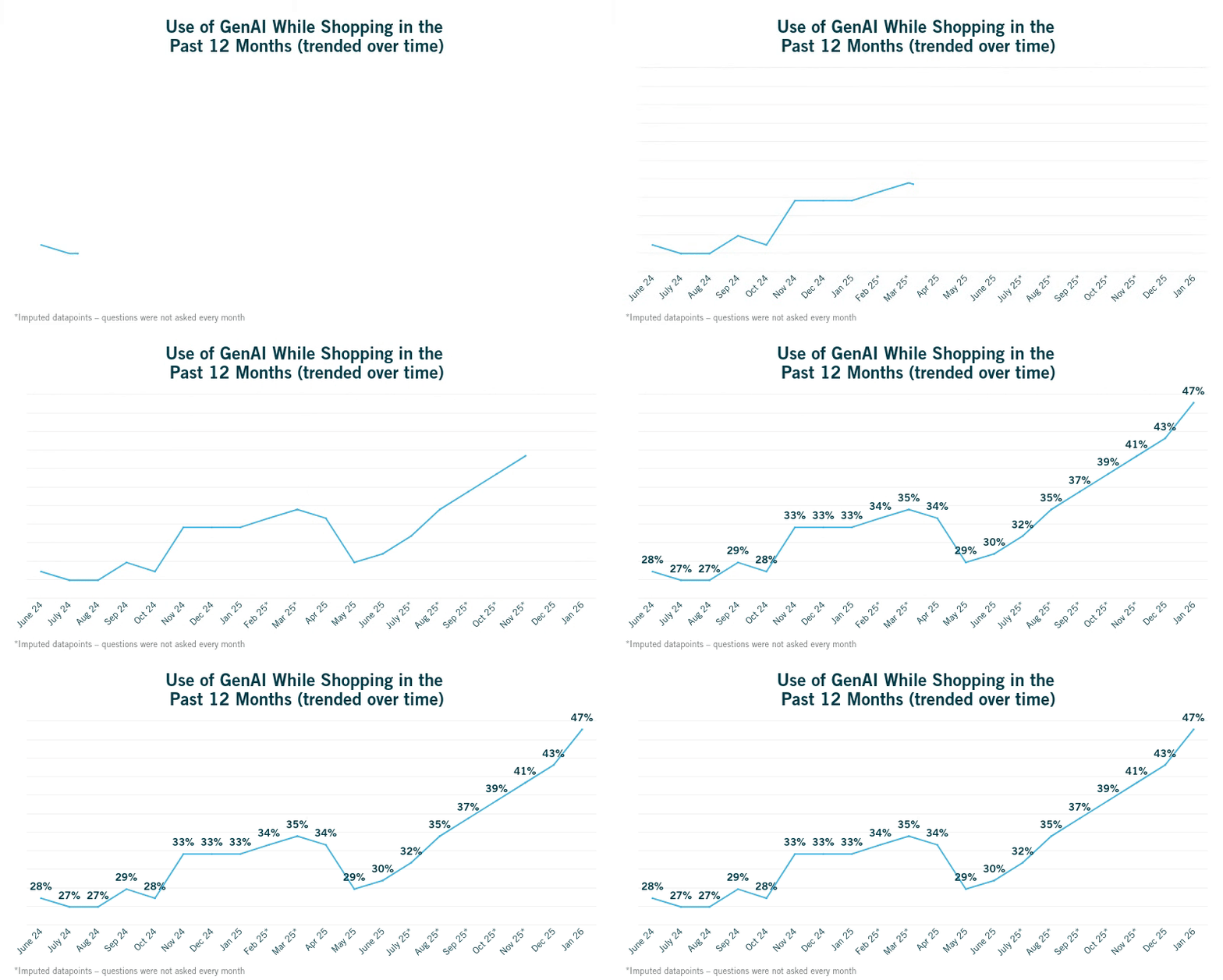
Over the past 18 months, reported use of GenAI while shopping has accelerated—from roughly one-quarter of U.S. consumers to nearly half today.1
Source: Burke Omnibus; n=600 rep US consumers each month
This builds on our earlier research2 showing GenAI adoption concentrated in complex, high risk decisions. What’s new is how broadly GenAI is now showing up across categories and journeys.
GenAI use still over indexes as a decision-making tool in service categories like real estate, travel planning, financial decisions, and healthcare—categories marked by complexity, infrequent purchase cycles, and higher perceived risk. But adoption is no longer confined to these categories. Meaningful use now appears across electronics, home furnishings, apparel, beauty, and even everyday essentials.
Source: Burke Omnibus; January 2026; n=600 rep US consumers
Generative AI Is Replacing Search—But Only Early in the Journey
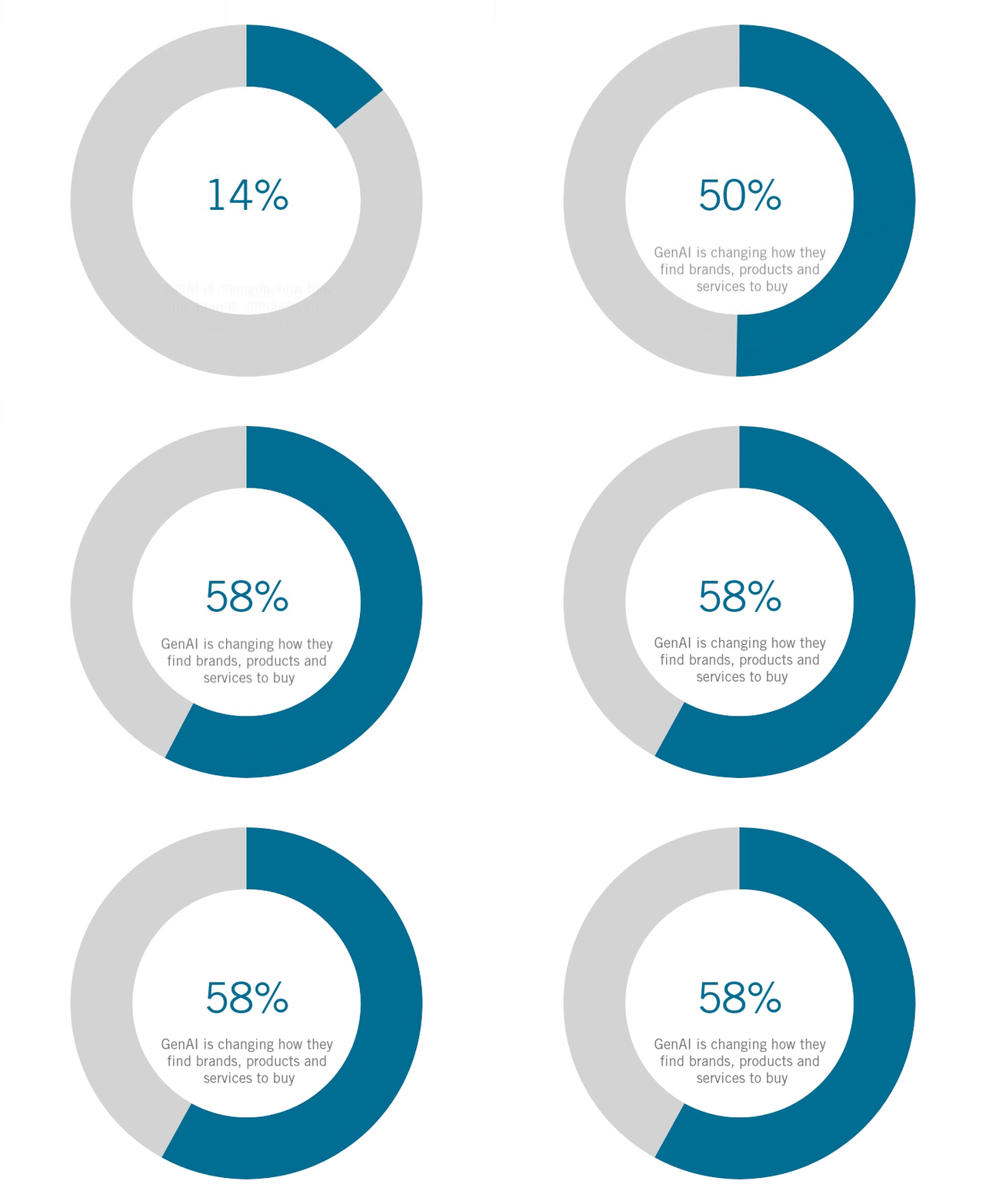
Among shoppers who already use GenAI while shopping, a majority say it is changing how they find brands, products, and services. Nearly one in four report relying less on traditional search engines altogether.3 This aligns with Semrush data who tracks AI search vs. traditional search use and predicts AI search will surpass traditional search in 2028.4
How is use of GenAI platforms changing how shoppers learn about products/services?
Source: Burke Omnibus; January 2026; n=600 rep US consumers
In a prior article, we documented this shift: discovery is moving from lists of links to direct, synthesized answers. GenAI doesn’t just retrieve information—it interprets it and makes a recommendation.5
The Generative AI Journey Breaks at the Point of Purchase
Today’s pattern is clear: GenAI’s strength is not transactional—it’s educational—at the start of the shopper journey, where preferences and mental shortcuts begin to form.
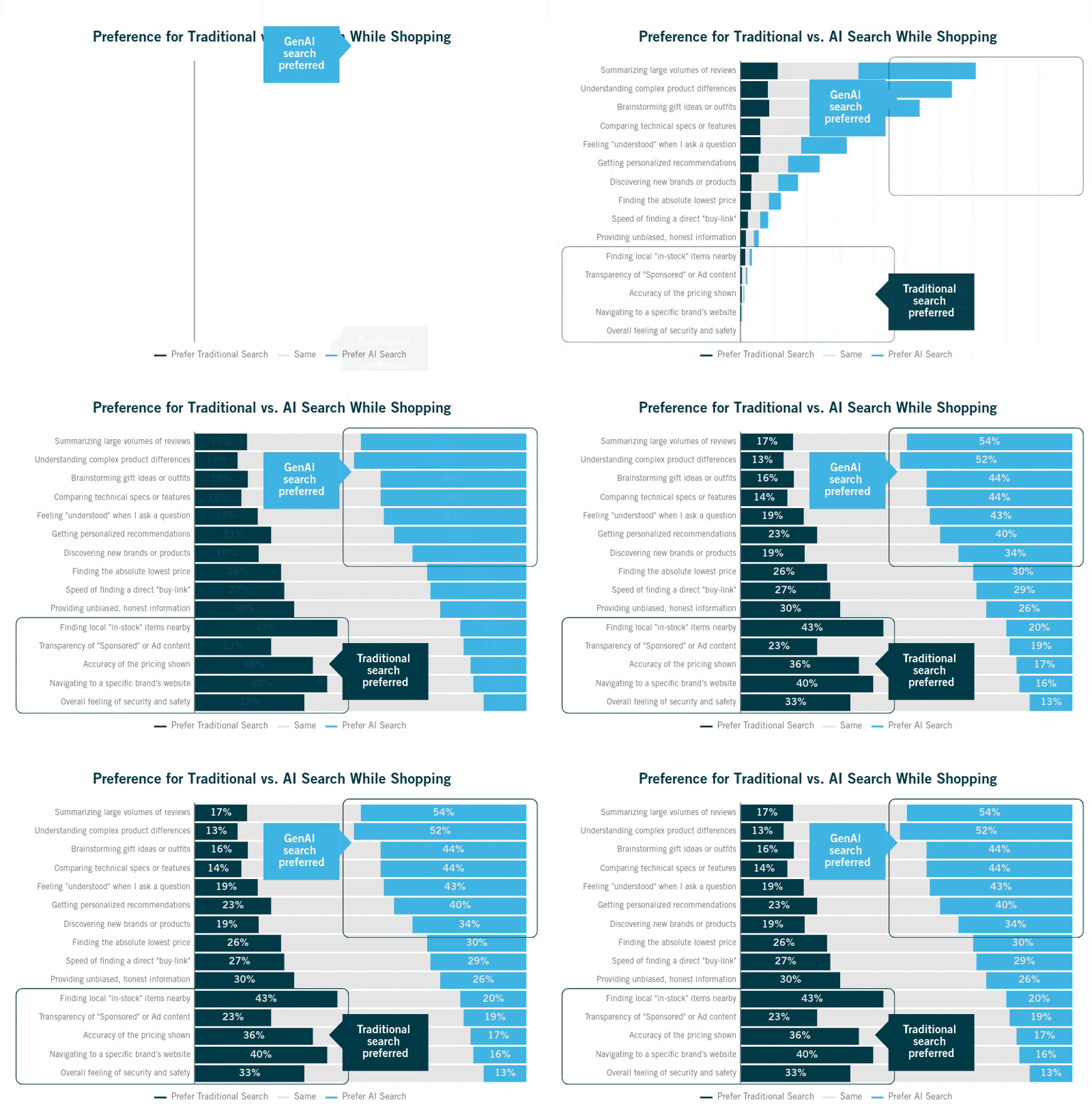
When we look at where shoppers prefer GenAI versus traditional search today, a clear dividing line emerges. In short, GenAI wins the thinking early in the journey; search still wins the final transaction. This is a critical distinction. GenAI is shaping what shoppers consider, but traditional tools still control how purchases get executed. Which supports recommendations from experts who say the future of awareness and conversion is about AEO and SEO, not one or the other.
Source: Burke Omnibus, Jan 2026; among those who use Gen AI while shopping: n=149
Trust Is the Gatekeeper to Conversion
The reason GenAI stops short of checkout is not usefulness—it’s trust.
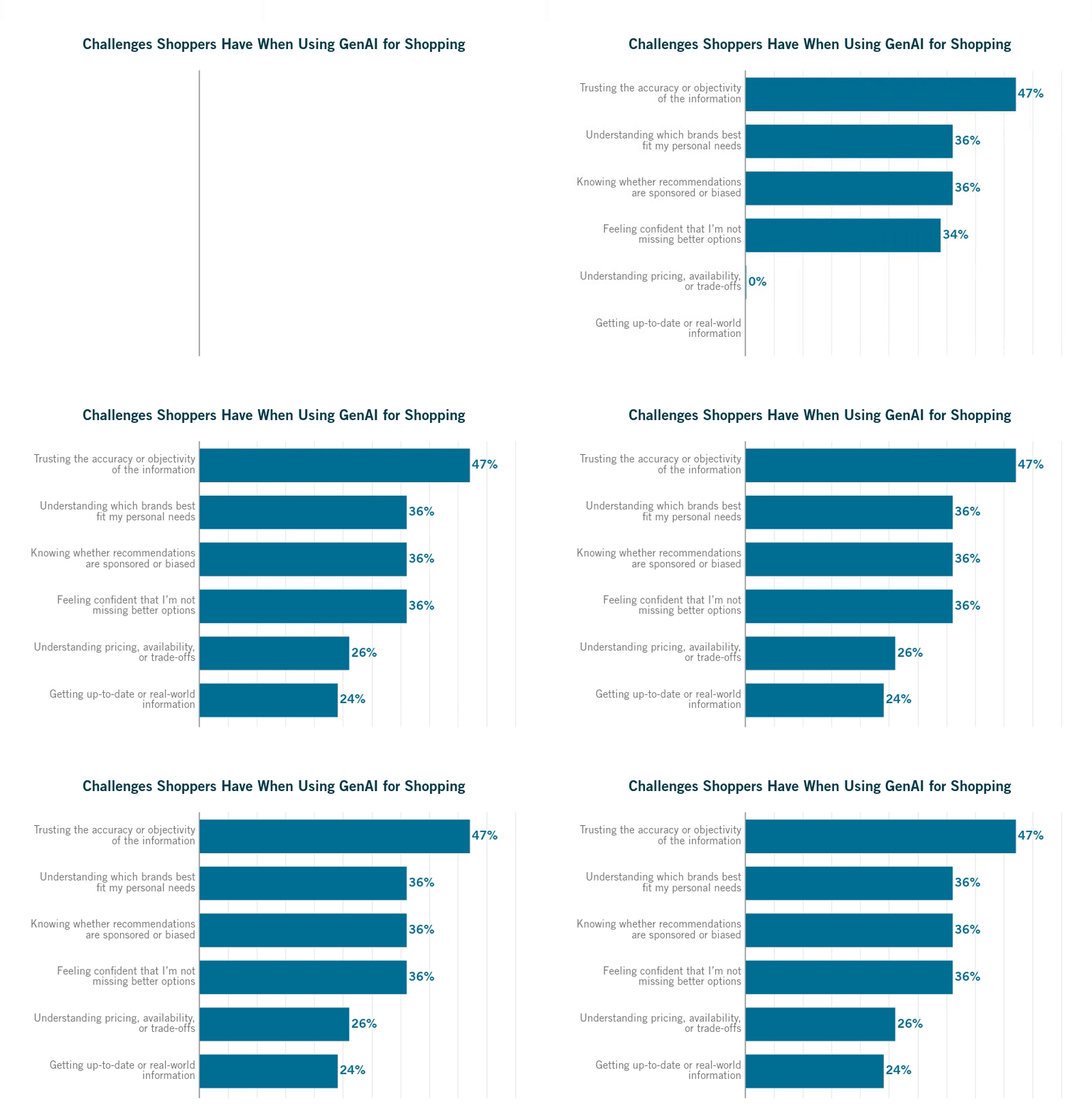
Nearly half of GenAI shoppers express concerns about the accuracy or objectivity of information. Others worry about hidden sponsorships, biased recommendations, or missing better options elsewhere.6 These concerns keep shoppers from fully delegating purchase decisions to AI, and the development of advertising-based revenue streams by notable LLMs is likely to increase this skepticism.
Source: Burke Omnibus, Jan 2026; among those who use Gen AI while shopping: n=149
Until adoption of more robust Agentic AI models and GenAI platforms offer clearer transparency around sourcing, bias, and real-time validation, shoppers will continue to “hand off” the journey to traditional search before committing to a purchase.
What This Means for Brands and Retailers
Taken together, the data points to a fundamental shift:
Influence of GenAI is focused earlier in the journey—shoppers continue to use traditional methods to complete the transaction.
Brands that focus exclusively on SEO, retail media, and last touch optimization risk missing out on opportunities to spur top-of-mind awareness at the moment when shoppers are forming preferences, narrowing options, and defining what “best choice” looks like.
Winning in this environment means:
Creating content for education and sensemaking, not just conversion making
Structuring product information in ways that make it easier for GenAI systems to interpret and summarize
Establishing trust before checkout, especially as GenAI-enabled transactions expand and shoppers seek assurance they—not sponsors—are in control.
Given today’s dynamics, Generative AI isn’t killing search. It’s reassigning its role. And increasingly, the brands that shape the early conversation will be the ones shoppers choose when it’s time to buy.
But stay tuned, because things are changing fast.
James Sorensenhas been shaping shopper insights since 1993. He began his career with Sorensen Associates, a leader in in-store research, and later led Kantar’s shopper insights practice. Today, James brings this deep expertise to Burke, serving as a trusted advisor in retail and shopper insights—helping clients uncover innovative, actionable strategies for growth.
Eric Scheer is SVP, Brand Solutions at Burke, Inc. Drawing from over 20 years of experience, Eric is especially good at solving brand challenges. Having been an entrepreneur, combined with extensive branding, design, and strategy experience, Eric has the know-how and strategic approach to conquer any obstacle your brand may encounter.
Interested in reading more? Check out James’ other articles:
https://www.burke.com/wp-content/uploads/2026/06/2026-conference-BYM-Graphic-1.png8001200Jenna Brookshttps://www.burke.com/wp-content/uploads/2024/01/BurkeLogoR-forsite.pngJenna Brooks2026-06-12 15:00:452026-06-16 14:33:01Reflections from Building a More Connected Insights Ecosystem
https://www.burke.com/wp-content/uploads/2026/05/AdobeStock_449752604-web.png8001200Monica Salsberyhttps://www.burke.com/wp-content/uploads/2024/01/BurkeLogoR-forsite.pngMonica Salsbery2026-05-28 15:03:262026-06-15 13:41:56Your Data Strategy is Your Intelligence Strategy
What is the difference between generative AI and traditional search engines?
Generative AI search provides conversational, synthesized answers by combining information from multiple sources into a single response. Traditional search engines primarily display ranked web pages that users browse to find information. Generative AI is best for summaries and research, while traditional search remains stronger for navigation, local searchers, and real-time information.
Why does traditional search still matter in the age of generative AI?
Traditional search still matters because users rely on it for direct website access, verified sources, local business results, ecommerce searches, and real-time updates. Search engines also allow users to compare multiple perspectives before making decisions.
How is generative AI changing consumer search behavior?
Generative AI is shifting users from short keyword searches to conversational queries. Instead of typing fragmented phrases, users now ask complete questions and expect direct, context-rich answers from AI-powered platforms.
What is Answer Engine Optimization (AEO)?
Answer Engine Optimization (AEO) is the process of optimizing content so that AI-powered search systems can easily understand, extract, and present answers to users. AEO focuses on conversational queries, semantic relevance, structured formatting, and concise answers.
How can brands optimize content for AI-powered search engines?
Brands can optimize for AI search by creating clear and concise answers, using structured headings, implementing FAQ sections, adding schema markup, and writing conversational content that aligns with their user intent.
To provide the best experiences, we use technologies like cookies to store and/or access device information. Consenting to these technologies will allow us to process data such as browsing behavior or unique IDs on this site. Not consenting or withdrawing consent, may adversely affect certain features and functions.
Functional
Always active
The technical storage or access is strictly necessary for the legitimate purpose of enabling the use of a specific service explicitly requested by the subscriber or user, or for the sole purpose of carrying out the transmission of a communication over an electronic communications network.
Preferences
The technical storage or access is necessary for the legitimate purpose of storing preferences that are not requested by the subscriber or user.
Statistics
The technical storage or access that is used exclusively for statistical purposes.The technical storage or access that is used exclusively for anonymous statistical purposes. Without a subpoena, voluntary compliance on the part of your Internet Service Provider, or additional records from a third party, information stored or retrieved for this purpose alone cannot usually be used to identify you.
Marketing
The technical storage or access is required to create user profiles to send advertising, or to track the user on a website or across several websites for similar marketing purposes.







 https://www.burke.com/wp-content/uploads/2026/06/AdobeStock_561028135-web.png
800
1200
Jenna Brooks
https://www.burke.com/wp-content/uploads/2024/01/BurkeLogoR-forsite.png
Jenna Brooks2026-06-16 09:48:362026-10-20 17:12:29The Rise of AI-Moderated Interviews
https://www.burke.com/wp-content/uploads/2026/06/AdobeStock_561028135-web.png
800
1200
Jenna Brooks
https://www.burke.com/wp-content/uploads/2024/01/BurkeLogoR-forsite.png
Jenna Brooks2026-06-16 09:48:362026-10-20 17:12:29The Rise of AI-Moderated Interviews